Managing a pivot to follow the customers
Pivoting a US-based PFM startup from B2C to B2B.
Background
In the US, sending and receiving money, managing your budgets, saving, investing across different asset classes, and applying for loans all happen largely in separate apps. Here in Europe, we've had Open Banking for many years now and this fragmented market place isn't something we're used to.
NMD+ were brought onboard by the British CEO of Unifimoney to be the design team that would be able to bring that European functionality to the US market. We looked to solve the problem of how to smooth over the problem that each service (loan, savings, accounts, crypto, equities, etc.) had it's own API to a third-party provider in order to make the app feel like one unified set of services. The product onboarding needed to be easy to get through yet detailed enough to sign up for each service, whilst always remaining compliant with financial authority regulations and legislation.
When we arrived there was a working prototype app that had been designed largely by the engineering team. User journeys were documented but leaned heavily in the direction of ease of build rather than ease of use for the customer base. Design work was limited, there wasn't a design system in place, and the IA was starting to fall apart as more and more features were added.
Setting the ground work
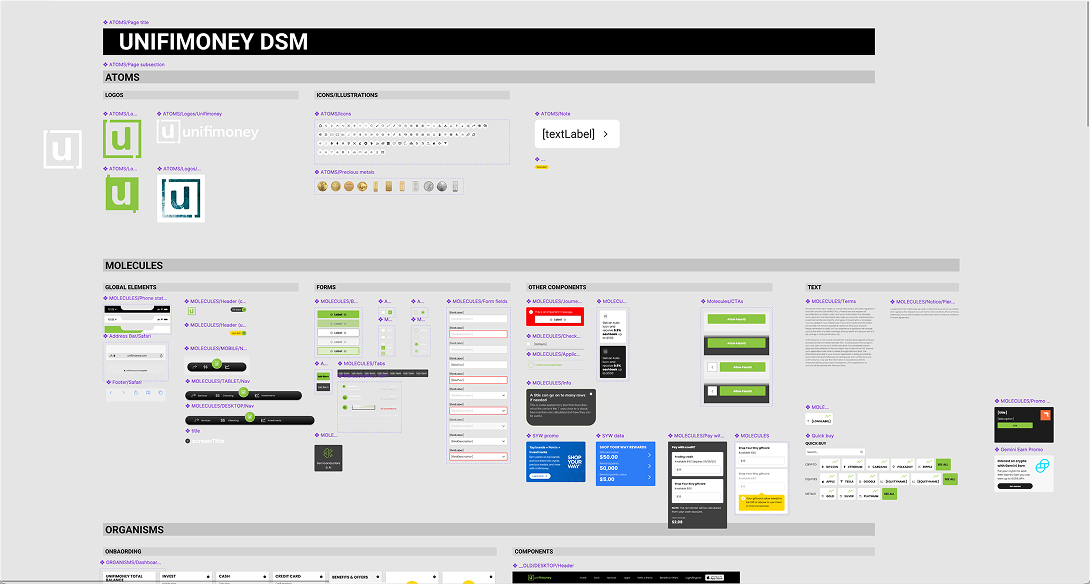
Whilst still focusing on the B2C aspect of the app offering, the first job was to audit what we had with the aim of creating a foundation for the design work to sit on in the form of a component library so Engineering could be sure they were using the right component for the right job, every time.
Over the course of a number of weeks, I had worked through all the user journeys to redesign the app from the ground up in Figma whilst working with the offshore Engineering team to minimise backend changes. We were in a good position by this point with full and detailed user journeys mapped out in a polished UI in Figma. Engineering were using those to build the app and review times had gone from hours in a week to a once in a sprint offline activity.
The pivot
One thing we couldn't get around was the lack of downloads in the US market. We knew this was a brave new world in PFM bringing a one bank mantra to the happily fragmented space, and that was the problem. Despite it being less than ideal, people were largely happy with a folder on their phones full of apps that did one thing each. Robinhood for investing, Venmo for money transfers etc.
We undertook a raft of customer and persona interviews with the hypothesis that people have a critical mass of apps they are willing to use to manage their finances. The interviews changed the way we were thinking about the business. The everyday managing of money and money it around was engrained so hard in customer's minds that it would be difficult to shift it but one spike kept on cropping up – investments.
There are many investment apps out there but statistically, most people in the US don't bank with large banks, they have their money in credit unions where they can get good rates on their savings and mortgages. The problem there is that they tend to be too small to offer investment products.
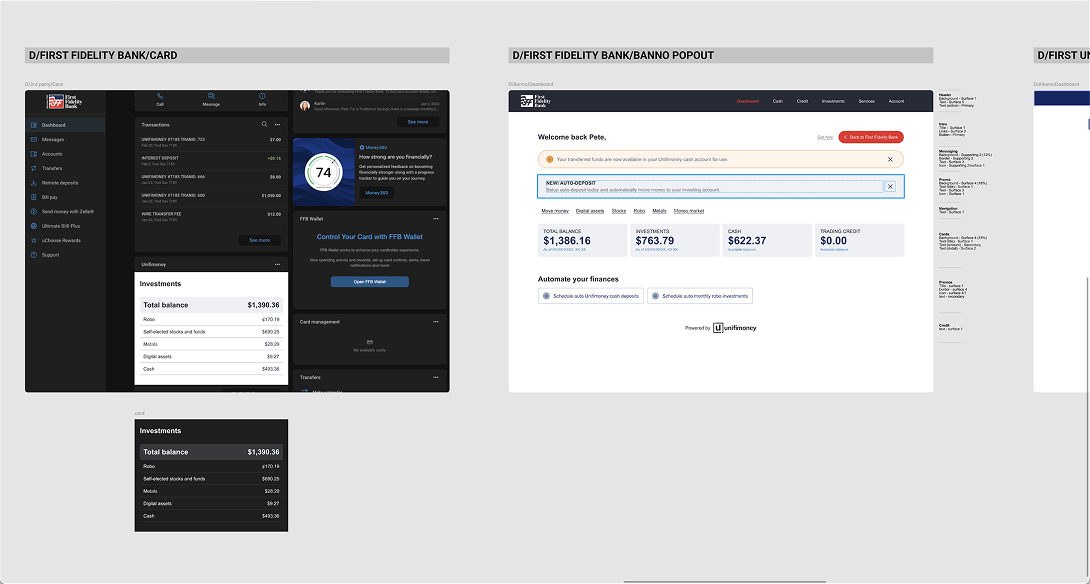
The 'ah-ha' moment came in Unifimoney not being the be-all PFM app, it became clear that we needed to reframe the app as investments as a service. We had all the APIed services into the app already and we just needed to create a white labelled version to allow credit unions to easily integrate Unifimoney into their own banking portals. This allowed them to quickly and easily offer their customers what they needed from investments without the risk of running the services themselves.
We were now a B2B SaaS investment service provider.
Realigning with credit unions
This wasn't back to the drawing board but we did need to dig a little deeper on what credit unions needed. Each one is different, has a different tech stack, capabilities, and willingness to engage but we set out to talk to as many as possible to frame the customer problem and ensured this pivot was the right one.
This round of research leaned on the customer interviews but looked to solve more for technical requirements than customer ones. We knew we had to satisfy for many levels of technological literacy and craft a product that would speak to procurement.
Outcome
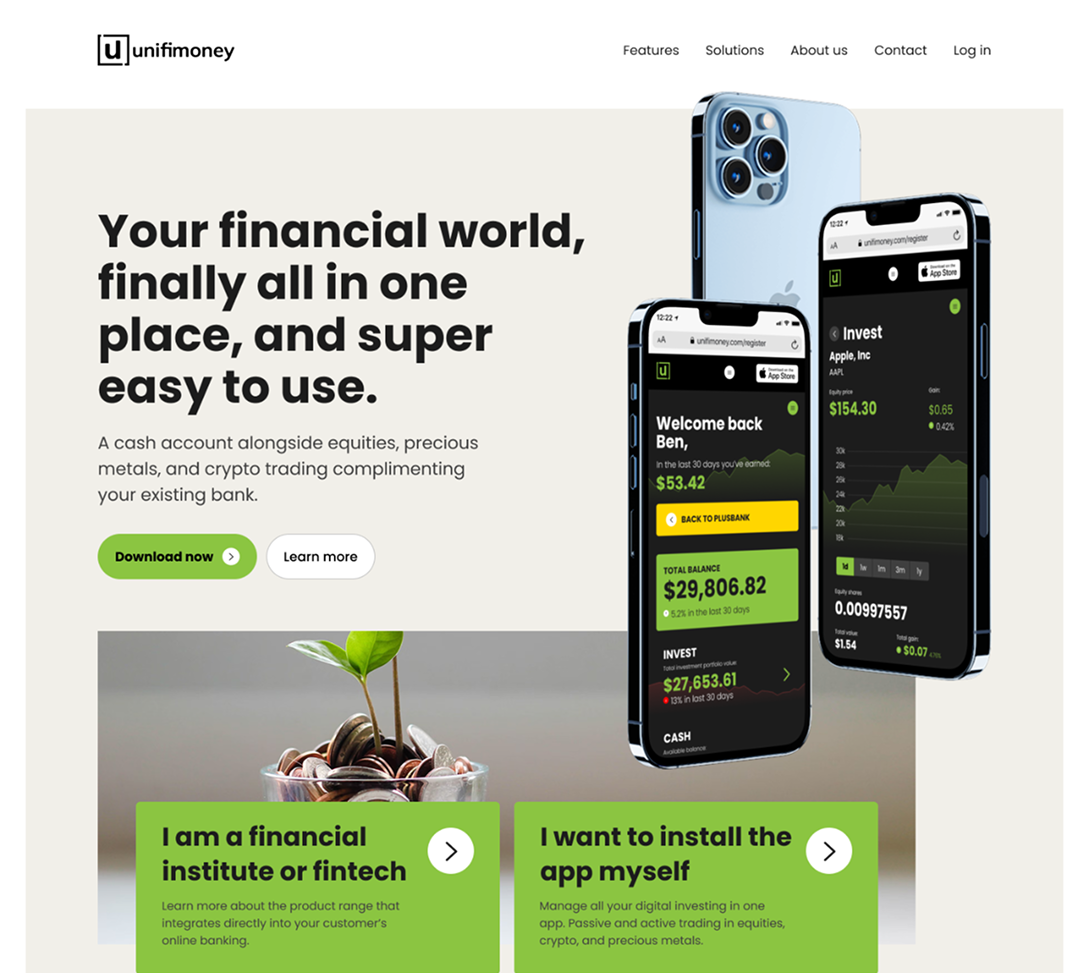
This pivot moment was one of many times working with Unifimoney that needed quick, confident decisions that we could act on as a design team. Based on this pivot, the brand now exclusively focuses on B2B credit union relationships and has not only honed it's B2C app but grown out the B2B teams to align with customer needs.
I don't have numbers on this one as we finished working with Unifimoney before figures were available but we had set up tracking throughout the app to understand how users were using the app allowing the business to track and refine.